Biography and Pictures
This is a Work in Progress ...
Ray Solomonoff and the New Probability Enlarged version of Springer Article.
More recent corrected version coming later.
Some Ray quotes and notes:
From "The Discovery of Algorithmic Complexity"(1997):
"The goal I set grew out of my early interest in science and mathematics. I found that while the discoveries of the past were interesting
to me, I was even more interested in how people discovered things.
Was there a general technique to solve all mathematical problems?
Was there a general method by which scientists could discover all
scientific truths?"
"The correspondences between probability evaluation and human learning are
very close:
(1) Both involve prediction of the future based on data of the past.
(2) In both of them, prediction alone is of little value. The prediction must
have an associated quantitative precision before it can be used to make decisions – as in statistical decision theory.
(3) In both cases the precision of prediction is critically dependent upon the
quality and quantity of data in the past.
(4) In both cases, the precision of the prediction is critically dependent on the quality and quantity of the computational resources available. Human decisions improve considerably if people have much time to organize data and try various theories in attempts to understand it.
That probability has to be defined in terms of the computational resources
necessary to calculate it, is a relatively recent development."
Some Ray quotes and notes:
From "The Discovery of Algorithmic Complexity"(1997):
"The goal I set grew out of my early interest in science and mathematics. I found that while the discoveries of the past were interesting to me, I was even more interested in how people discovered things. Was there a general technique to solve all mathematical problems? Was there a general method by which scientists could discover all scientific truths?"
"The correspondences between probability evaluation and human learning are very close:
(1) Both involve prediction of the future based on data of the past.
(2) In both of them, prediction alone is of little value. The prediction must have an associated quantitative precision before it can be used to make decisions – as in statistical decision theory.
(3) In both cases the precision of prediction is critically dependent upon the quality and quantity of data in the past.
(4) In both cases, the precision of the prediction is critically dependent on the quality and quantity of the computational resources available. Human decisions improve considerably if people have much time to organize data and try various theories in attempts to understand it.
That probability has to be defined in terms of the computational resources necessary to calculate it, is a relatively recent development."

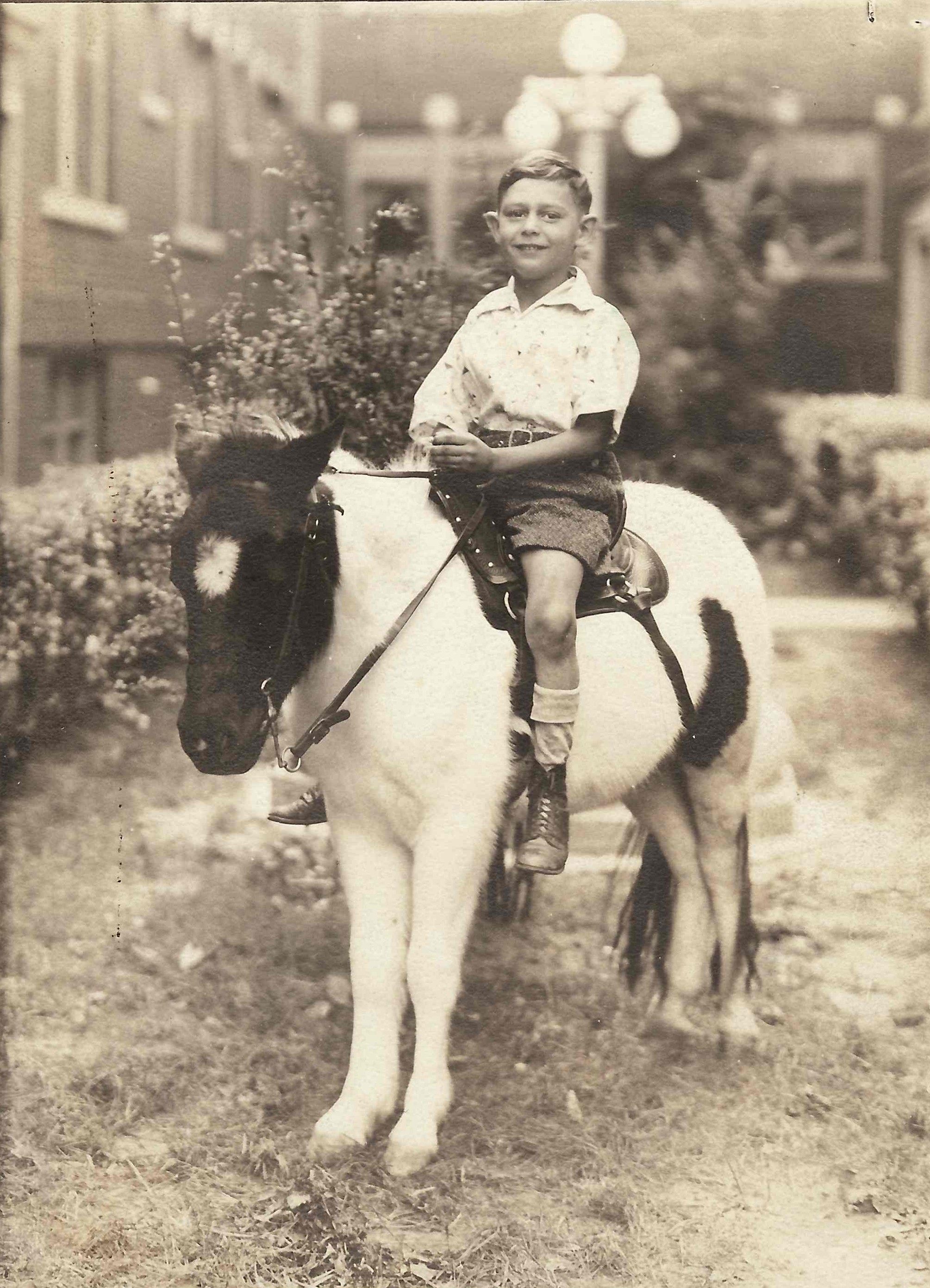
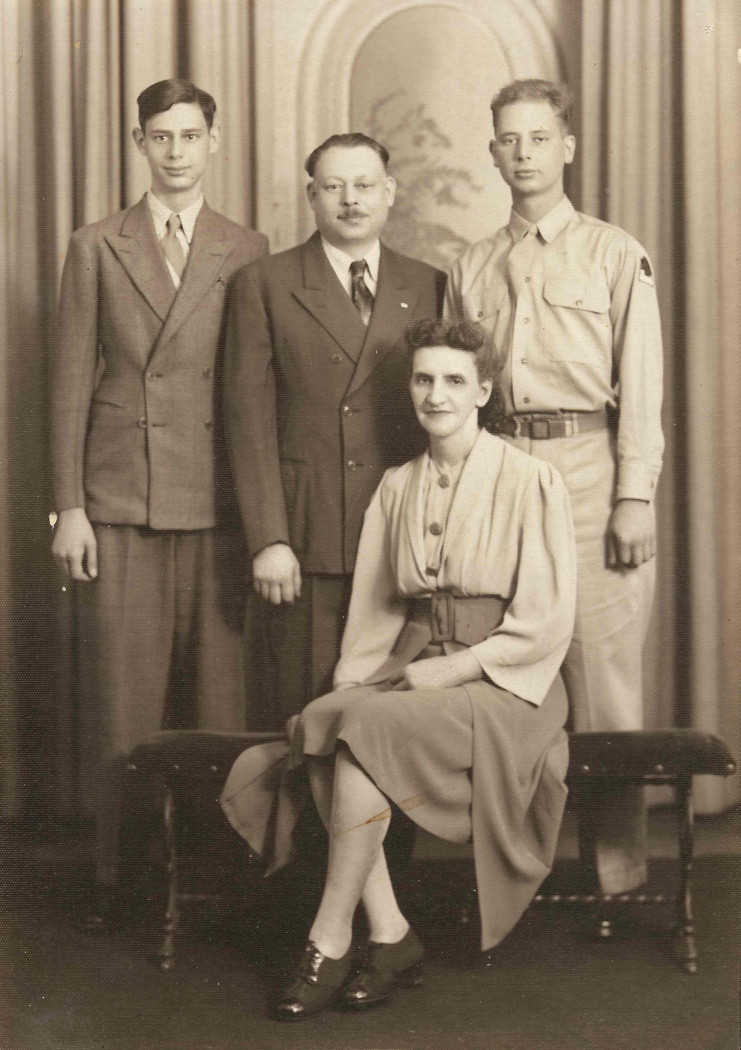
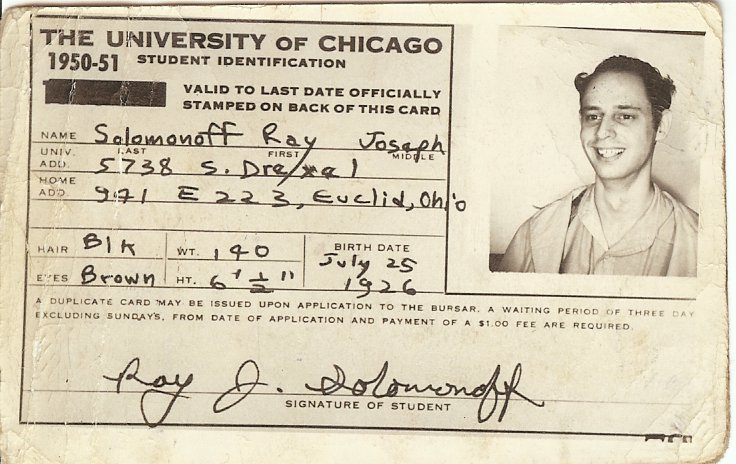
Ray had amazing teachers at UChicago. Nicholas Rashevsky, founded the field of Mathematical Biology, 1936. Anatole Rapoport, in 1948, wrote about connectivity in nets (including neural) and wrote two papers with Ray (1950). Enrico Fermi’s students taught Nuclear Physics to Ray from their compendium of Fermi’s notes (Titled Unclear Notes). Rudolf Carnap was Ray’s professor of philosophy. Carnap tried to figure out how to describe everything in the entire universe, including itself, by a long digital string. Ray's solution led to Algorithmic Probability.
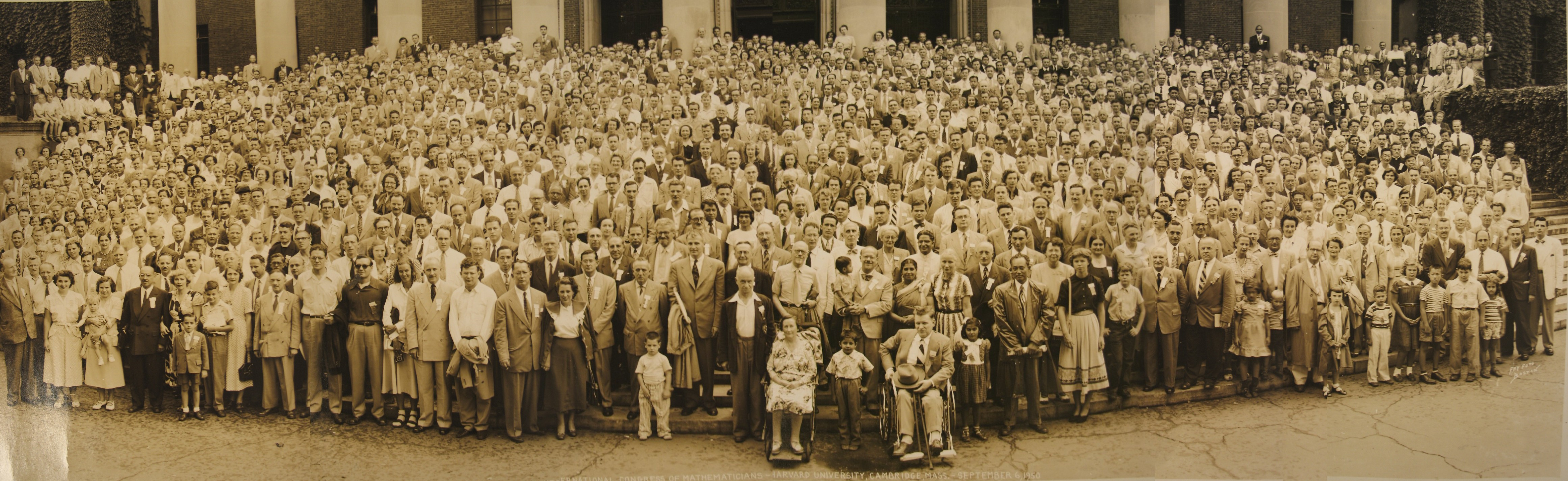
Can you find Ray? Click the picture to explore!
(Hint, look at Student ID, then look about 36.7% way in from left side, 60% up from bottom.[we think])

(Click on picture for more.)